What Was the First Movie in Color? A Full Timeline

Table of Contents
- Why the "first color movie" question has more than one answer
- How early color film worked
- The full timeline of color film
- What are the key color film processes?
- When did movies actually become color by default?
- Was The Wizard of Oz the first color movie?
- What was the first natural-color movie?
- Why does this history matter for editors today?
- Final thoughts
- Frequently Asked Questions
- Spotlight FX - Get free transitions, effects and workflow tools
The first movie in color was a hand-colored film from the 1890s, where each frame was painted by hand. But if you mean the first film shot in a true, "natural" color process that captured color as it happened, that was A Visit to the Seaside (1908), made with a system called Kinemacolor.
So the honest answer is: it depends on what you mean by "color." There were hand-painted films, tinted films, two-color processes, and three-strip Technicolor, and each one has its own "first."
Why the "first color movie" question has more than one answer
Most people imagine color film arrived in one moment, like a switch flipped from black-and-white to full color. It didn't happen that way.
Color came to film in layers, across roughly 70 years. Filmmakers first added color after shooting (by hand-painting or dyeing the film), then later invented cameras and film stock that could capture color directly. Each of those approaches produced its own landmark "first."
That's why you'll see different films credited as "the first color movie" depending on the source. One writer means the first hand-colored film. Another means the first natural-color process. A third means the first feature-length Technicolor movie. They're all technically correct, they're just answering slightly different questions.
How early color film worked
Before color cameras existed, filmmakers added color to black-and-white footage in two main ways:
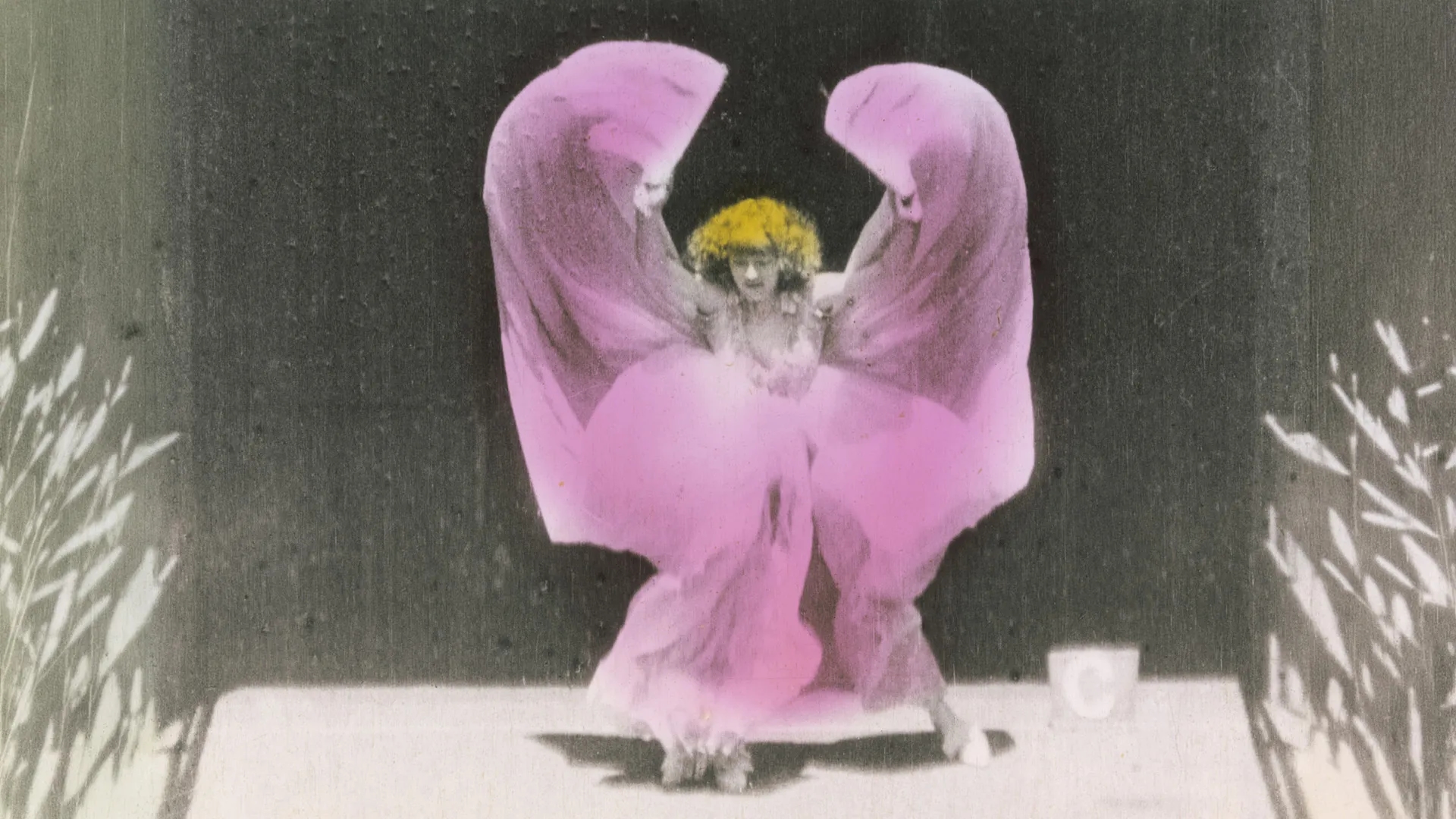
- Hand-coloring: Artists painted each individual frame by hand with tiny brushes. Incredibly slow, since a single minute of film contains well over a thousand frames.
- Tinting and toning: Entire scenes were dyed a single color to set a mood (blue for night, amber for warmth, red for fire).
True color film came later. Instead of adding color afterward, these systems recorded the actual colors in front of the camera. They generally fell into two families:
- Additive color (like Kinemacolor): Filmed through colored filters, then projected through matching filters to recombine the colors.
- Subtractive color (like Technicolor and later Eastmancolor): Captured color information and dyed it directly into the film, so it could be projected on any normal projector.
Subtractive systems eventually won out because they were more practical to project and looked far more natural.
The full timeline of color film
Here's the clearest way to see how color film developed, milestone by milestone:
- 1895: Early hand-colored motion pictures appear, including Edison-era shorts like Annabelle's Dance, painted frame by frame.
- 1899–1902: Inventor Edward Raymond Turner patents an early additive color system in 1899 and tests it around 1902.
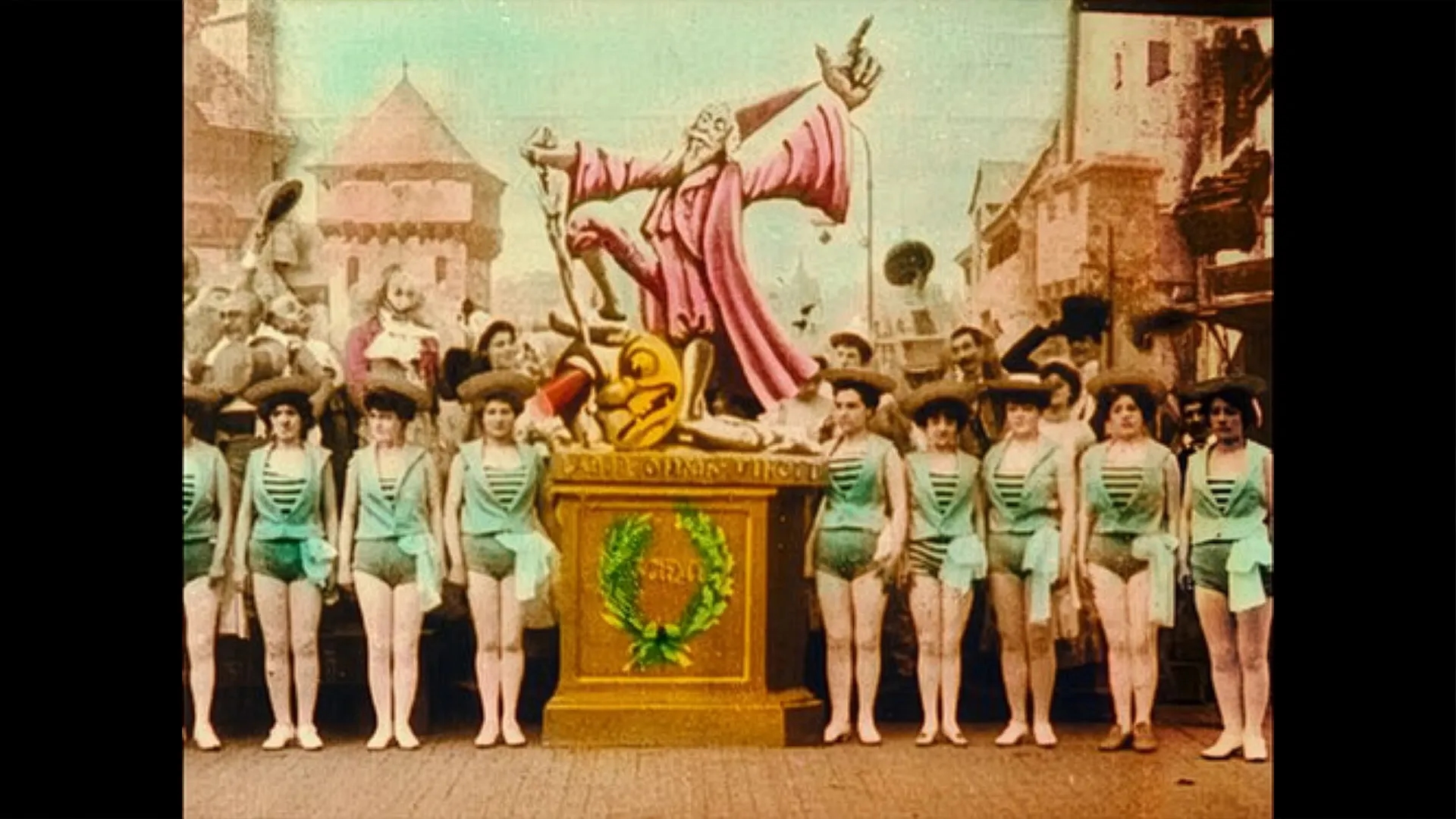
- 1902: Georges Méliès's A Trip to the Moon circulates in famous hand-colored versions, though it wasn't originally shot in a natural-color process.
- 1906–1909: Kinemacolor is demonstrated and commercialized, becoming the first practical motion-picture color system to reach the market.
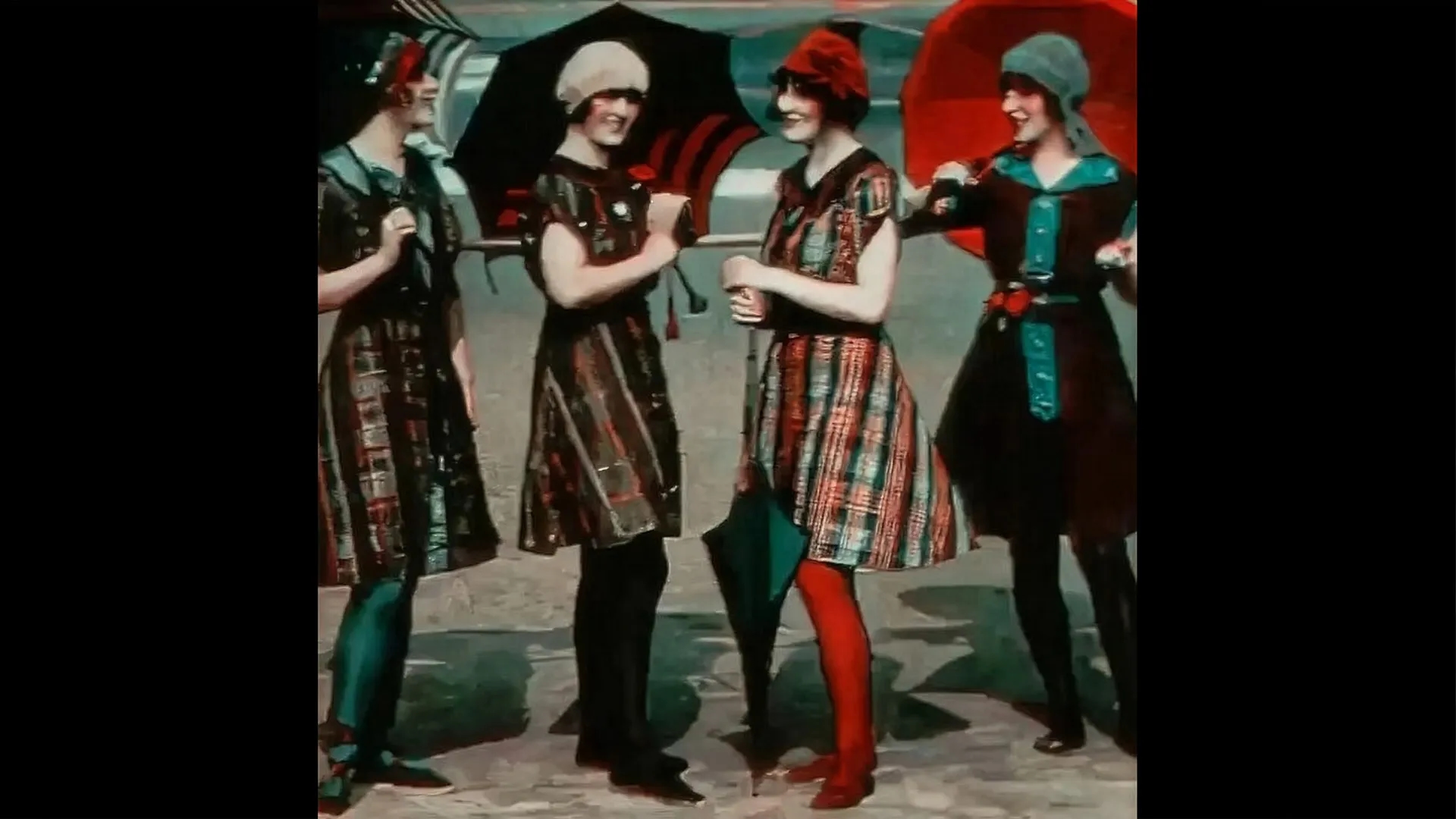
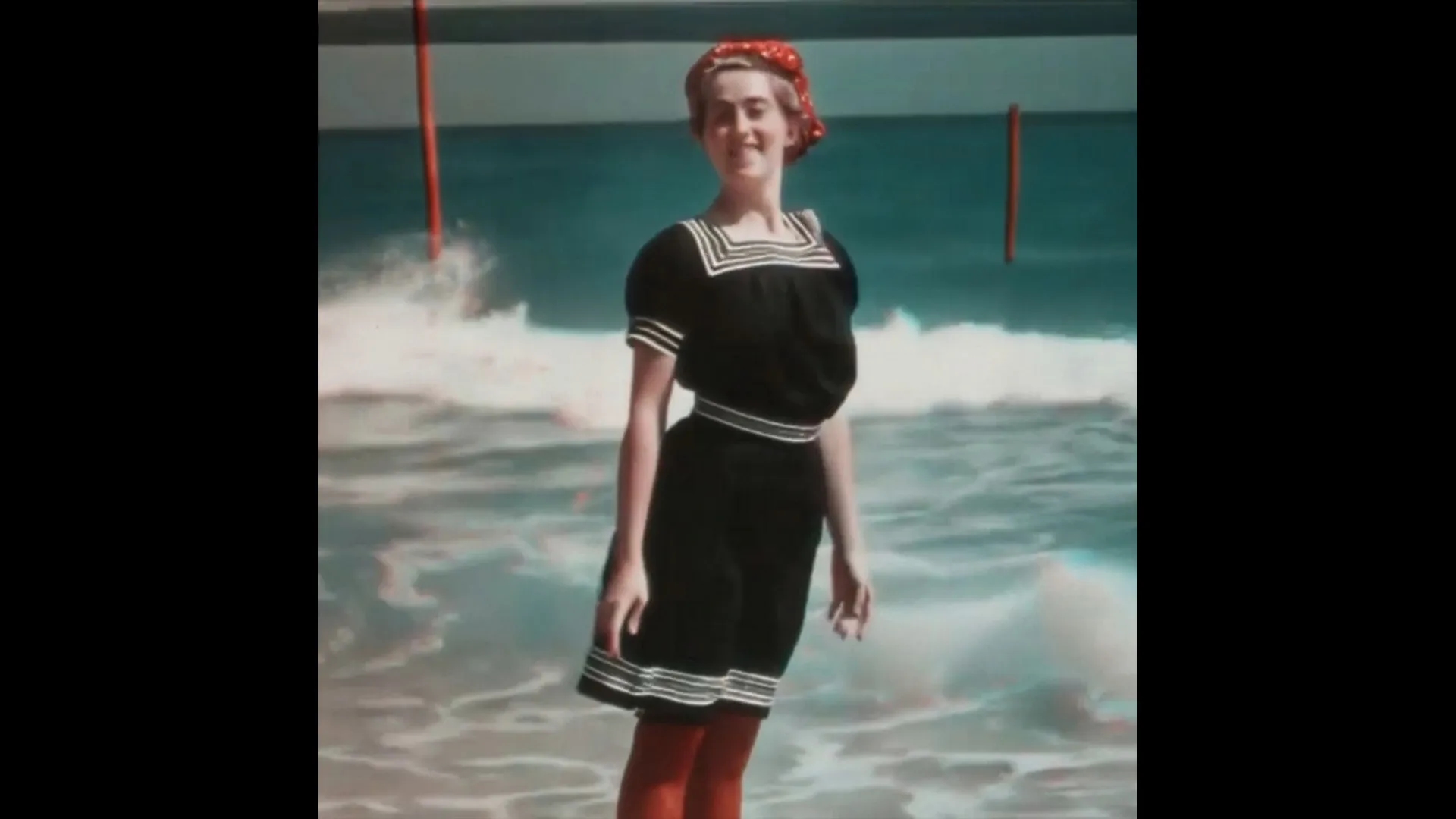
- 1908: A Visit to the Seaside is widely cited as the first commercially produced natural-color film, made with Kinemacolor.
- 1914: The World, the Flesh and the Devil is often called the first feature-length Kinemacolor film.
- 1922: The Toll of the Sea becomes the first major feature shot in two-color Technicolor.
- 1932: Disney's Flowers and Trees is the first animation made in three-strip Technicolor.
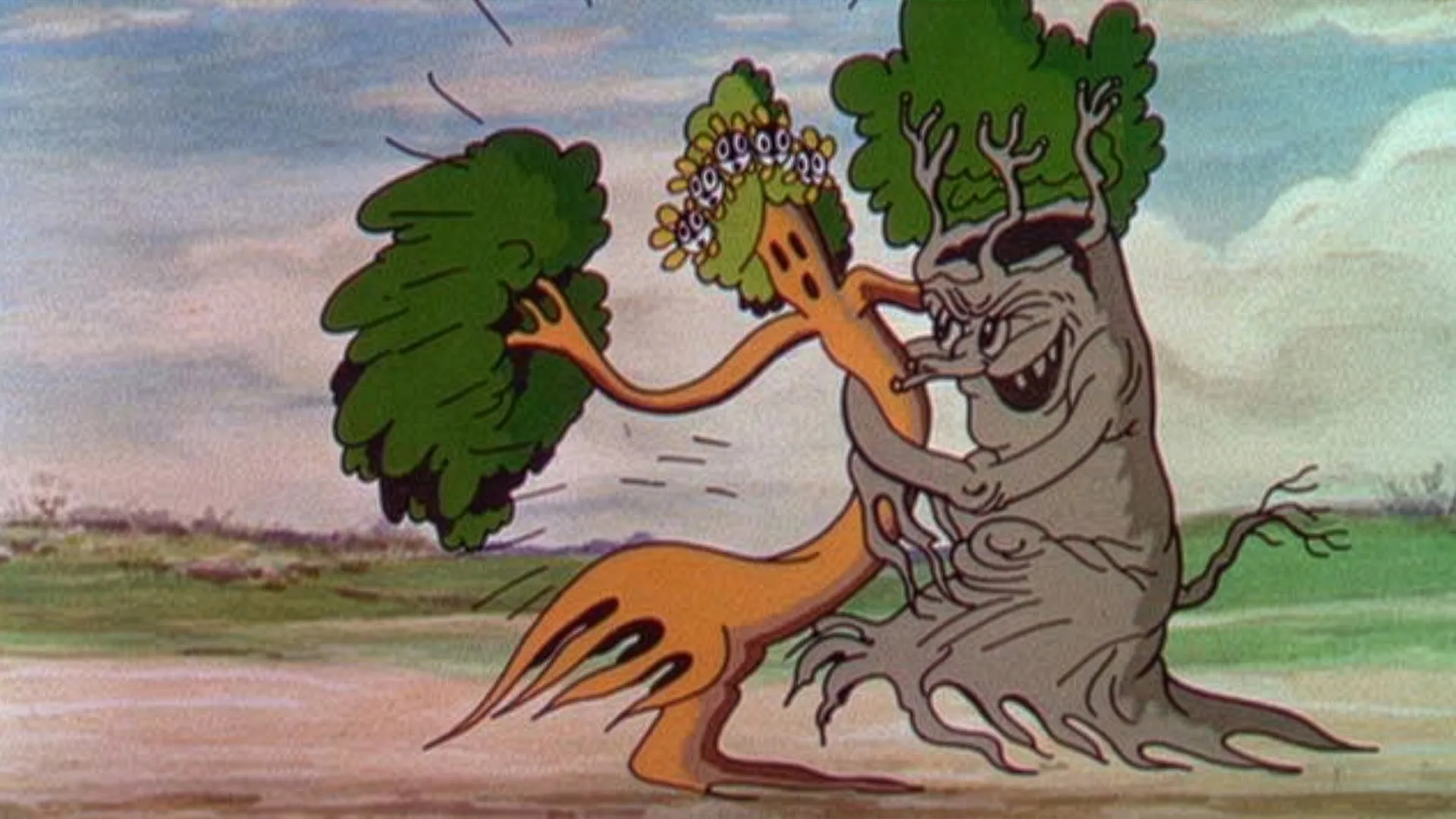
- 1934: La Cucaracha is the first live-action short in three-strip Technicolor.
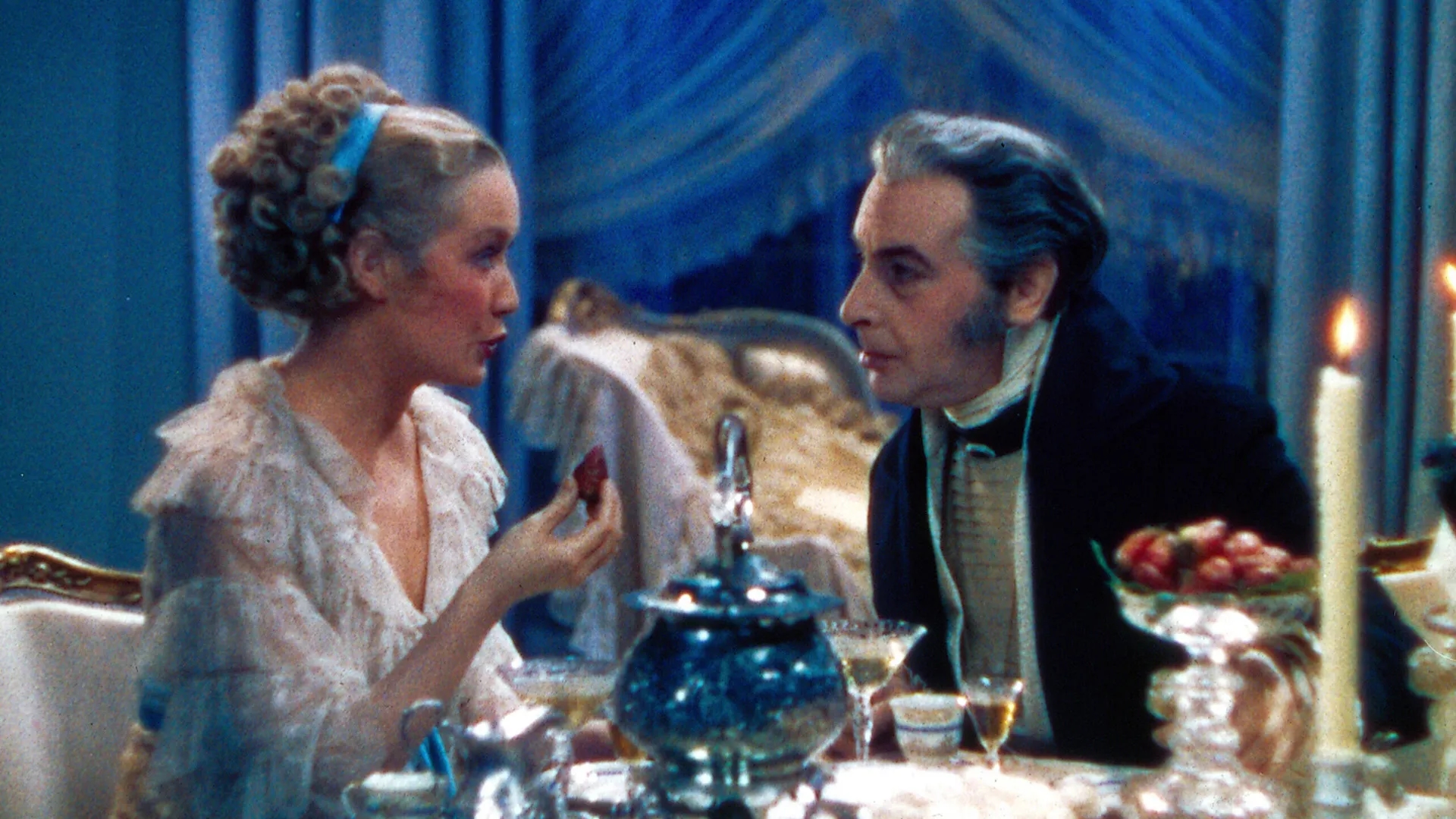
- 1935: Becky Sharp becomes the first feature film shot in three-strip Technicolor.
- 1939: The Wizard of Oz and Gone with the Wind turn color into a mainstream spectacle.
- 1951: Royal Journey is cited as the first commercial feature using Eastmancolor, a cheaper single-strip stock.
- 1950s–1960s: Affordable color film drives the big shift away from black-and-white.
- 1967: For the first time, more color films are made than black-and-white ones.
What are the key color film processes?
Four processes define this history. Understanding them clears up most of the confusion around "the first color movie."
Hand-coloring (1890s)
The earliest "color" in film. Artists literally painted each frame by hand. Beautiful, but wildly labor-intensive and impossible to scale, which is why it was reserved for short clips.
Kinemacolor (1906–1914)
The first practical natural-color process to reach audiences. It filmed through alternating red and green filters and projected the result the same way. It worked, but it had fringing and flicker issues, and it couldn't capture the full color spectrum. Still, A Visit to the Seaside (1908) earned its place as the first commercial natural-color film.
Technicolor (1922–1950s)
The name most people associate with classic color cinema. Technicolor evolved from a two-color system (The Toll of the Sea, 1922) to the famous three-strip process introduced in 1932. Three-strip Technicolor delivered the rich, saturated look of Becky Sharp (1935), The Wizard of Oz (1939), and Gone with the Wind(1939). It was gorgeous but expensive, requiring bulky cameras and specialized technicians.
Eastmancolor (1950s onward)
Kodak's Eastmancolor put color on a single, cheaper strip of film any standard camera could use. This is what finally made color affordable enough to become the industry standard, tipping the balance away from black-and-white through the 1950s and 60s.
When did movies actually become color by default?
Color didn't become the norm overnight, even after Technicolor existed.
Three-strip Technicolor was stunning but costly, so through the 1930s and 40s most films were still black-and-white, with color reserved for big-budget spectacles. The real turning point came with Eastmancolor in the 1950s, which made color cheap enough for everyday production.
By 1967, more color films were being made than black-and-white ones. From there, black-and-white shifted from being the default to being a deliberate artistic choice.
Was The Wizard of Oz the first color movie?
No. The Wizard of Oz (1939) was not the first color movie, and it wasn't even the first three-strip Technicolor feature. That title belongs to Becky Sharp (1935).
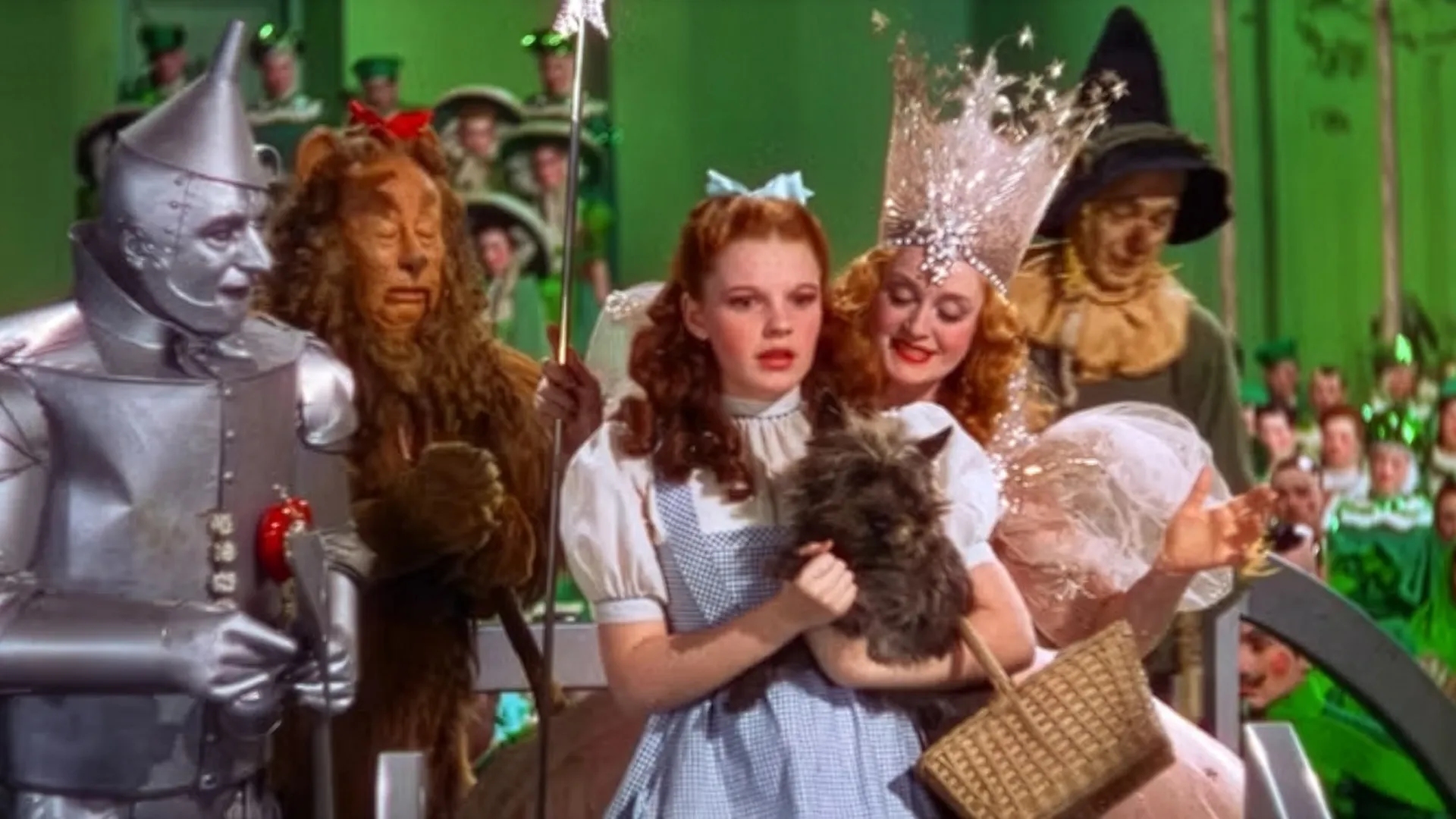
The Wizard of Oz is remembered as a color landmark because of how famously it used the format, the shift from sepia Kansas to vibrant, full-color Oz remains one of the most iconic moments in film history. It helped make color cinema a mainstream attraction, but it arrived years after color features already existed.
What was the first natural-color movie?
The first commercially produced natural-color movie is widely cited as A Visit to the Seaside (1908), shot using Kinemacolor.
"Natural color" means the film actually captured color at the moment of filming, rather than having color added by hand afterward. That's what separates it from the painted and tinted films of the 1890s and early 1900s.
Why does this history matter for editors today?
Understanding color film history isn't just trivia, it shapes the looks editors still reproduce today. The warm sepia-and-Technicolor aesthetic, faded film tints, and saturated "golden age" grades all trace back to these early processes.
Modern editors recreate these looks with overlays, color grading layers, and film-style effects rather than painting frames by hand. The instinct is the same as it was in 1895, make the image feel richer, more emotional, more cinematic. The tools just got a lot faster. With drag-and-drop film overlays and color presets inside your editor, you can land a vintage Technicolor-style look in seconds instead of building it from scratch.
Final thoughts
There's no single "first movie in color." Hand-colored films appeared in the 1890s, the first natural-color film (A Visit to the Seaside) arrived in 1908, the first three-strip Technicolor feature (Becky Sharp) came in 1935, and color only became the industry default in the 1960s after Eastmancolor made it affordable.
If you want to bring that classic cinematic color into your own edits, check out Spotlight FX. You'll find film overlays, color grading layers, and cinematic transitions you can drag straight into your Premiere Pro or After Effects timeline, fully customizable, no painting frames required.
Frequently Asked Questions
What was the first movie in color?
It depends on the definition. The first films with color were hand-colored shorts from the 1890s. The first film shot in a true natural-color process was A Visit to the Seaside (1908), made with Kinemacolor.
When did movies get color?
Color appeared as early as the 1890s through hand-painting, with natural-color film arriving in 1908. But movies only became color by default in the 1950s and 60s, after Eastmancolor made color stock affordable.
When was the first color movie?
The first commercially produced natural-color movie, A Visit to the Seaside, came out in 1908. The first three-strip Technicolor feature, Becky Sharp, premiered in 1935.
When did color film come out?
Practical color film reached audiences with Kinemacolor around 1906–1908. Technicolor's famous three-strip process arrived in 1932, and the cheaper Eastmancolor stock came out in the early 1950s.
When was color film invented?
Early color systems were patented around the turn of the 20th century, including Edward Raymond Turner's additive system in 1899. Kinemacolor became the first commercially successful color process in the late 1900s.
What is color film?
Color film is motion picture film that records and reproduces color images, either by capturing color directly through filters and dyes (natural color) or by adding color manually to black-and-white footage (hand-coloring and tinting).
Related Posts

_High_Quality_Frame_3.jpg)
 Video Editing
What is a Low Angle Shot? Low Angle Photography and Filmmaking Explained
 Video Editing