What Is an Over the Shoulder Shot? OTS Shot Explained

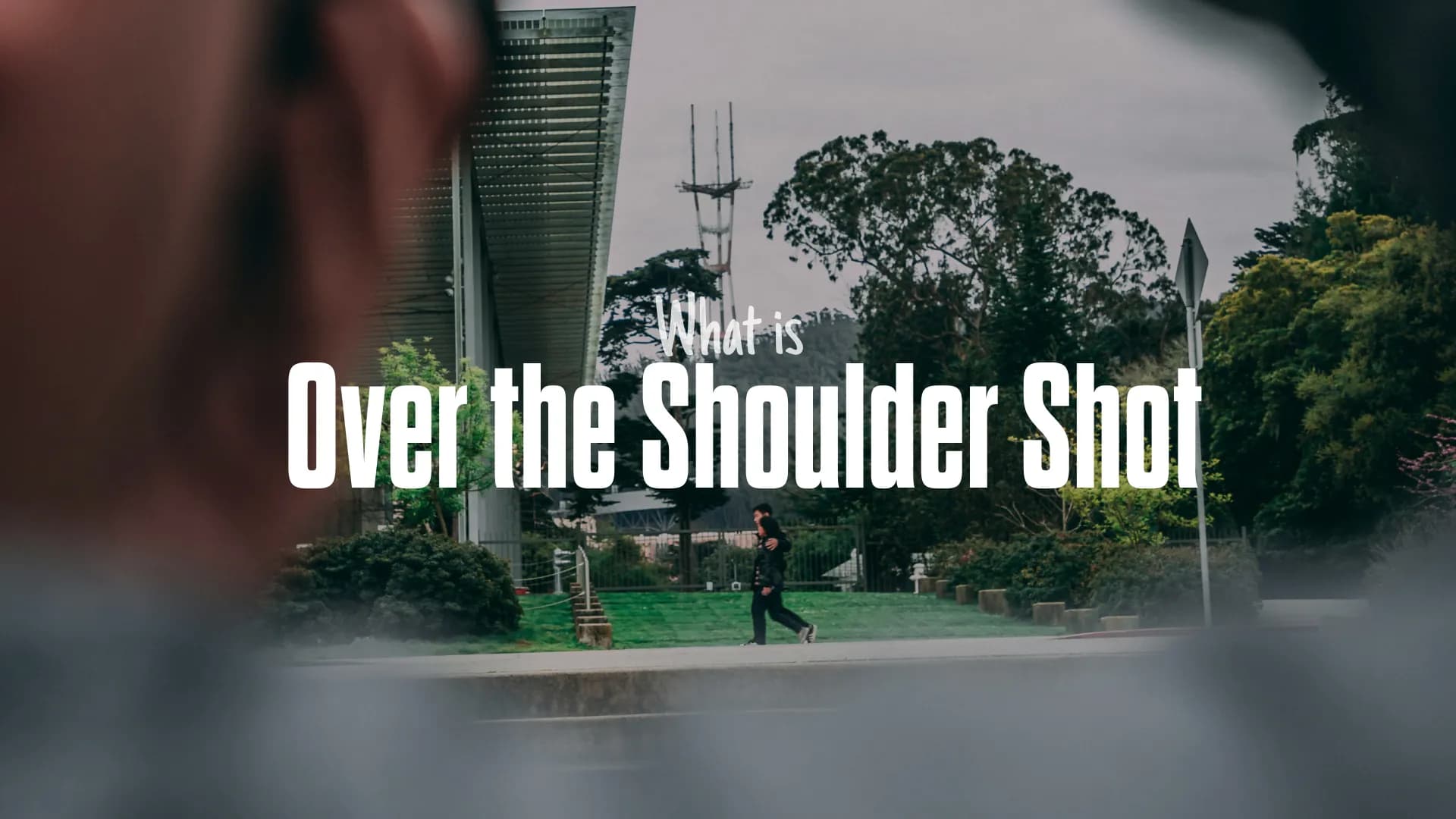
Table of Contents
- Why the over the shoulder shot matters
- How an OTS shot works
- What are the key types of over the shoulder shots?
- How to film an OTS shot
- What is the difference between an OTS shot and a POV shot?
- What is a dirty over the shoulder shot?
- When should you use an over the shoulder shot?
- What is a shot-reverse-shot?
- Final thoughts
- Spotlight FX - Get free transitions, effects and workflow tools
An over the shoulder shot (OTS shot) is a camera framing where the camera sits behind one character, showing part of their shoulder or head in the foreground while focusing on another subject in front of them.
It's one of the most common shots in filmmaking, especially during dialogue scenes, because it shows you who's talking, who's listening, and how the two characters relate in space.
Why the over the shoulder shot matters
The over the shoulder shot is a workhorse of visual storytelling. Almost every conversation scene you've watched in film or TV uses it, and for good reason: it solves a problem that simpler shots can't.
A straight close-up shows a character's face, but it strips away context. You don't know who they're looking at or where they're standing. The OTS shot fixes that by keeping a piece of the other character in frame. The audience instantly understands the spatial relationship between two people, where they are, who's near whom, and who the focus is on.
It also pulls the viewer into the scene. By placing the camera behind a shoulder, you put the audience inside the conversation rather than watching it from the outside. That sense of presence is what makes OTS shots feel intimate and natural, which is why they've been a default choice for dialogue coverage for decades.
How an OTS shot works
An OTS shot works by using the foreground character as a frame for the subject behind them.
The camera is placed just behind and slightly to the side of one actor, so the viewer sees the other actor clearly while still being reminded of the first character's presence. The shoulder (and sometimes part of the head) sits in the corner of the frame, guiding the eye toward the main subject.
Here's what makes the shot do its job:
- Spatial context: the foreground shoulder tells the viewer exactly where the two characters stand relative to each other.
- Focus direction: the shoulder acts like a natural pointer, leading attention to the subject in front.
- Eyeline matching: the two characters appear to look at each other naturally across cuts.
- Shot-reverse-shot: OTS shots are usually shot in pairs, flipping between both characters so a conversation feels balanced and continuous.
Think of it as showing one character's perspective without fully becoming a point-of-view shot. You're near their viewpoint, but the camera is still an observer.
What are the key types of over the shoulder shots?
Not all OTS shots look the same. Small changes in framing completely change the mood. Here are the main variations.
Clean OTS
Very little of the foreground character is in frame, just a hint of shoulder. This puts almost all the focus on the background subject, perfect when their expression or reaction is what matters most.
Dirty OTS
More of the foreground shoulder and head stay in frame. This adds immersion and scene context, reminding the viewer that two people are sharing the moment. It's the more "involved" version of the shot.
Wide OTS
The framing pulls back to include more of the environment around the characters. Useful for establishing location while still anchoring the conversation.
Close OTS
The camera pushes in tight for intensity. Great for emotional pressure, arguments, or high-stakes moments where you want the viewer to feel the heat.
Low-angle OTS
Shooting from below can make the background character feel dominant or intimidating, an easy way to signal power imbalance between two characters.
How to film an OTS shot
Filming a clean over the shoulder shot comes down to camera placement, framing, and continuity. Here's how to approach it:
- Position the camera behind the foreground shoulder. Place it just behind and slightly to the side so the background subject is clearly visible.
- Keep the foreground subject to about a third of the frame or less. They should frame the shot, not block it. Avoid revealing too much of their face or nose.
- Match eyelines. Make sure the two characters appear to be looking naturally at each other. Mismatched eyelines break the illusion instantly.
- Follow the 180-degree rule. Keep the camera on one side of an imaginary line between the two characters so screen direction stays consistent when you flip to the reverse shot.
- Choose your depth of field intentionally. Shallow focus isolates the background subject; wider focus keeps more of the environment in view.
- Plan the reverse shot. Match the two angles in distance, framing style, and lens length so the conversation cuts together cleanly.
- Shoot extra takes. Grab variations with slightly different lens lengths and camera positions to give yourself options in the edit.
A quick tip: balance the lighting between both characters unless you deliberately want one to visually dominate the scene.
What is the difference between an OTS shot and a POV shot?
An OTS shot keeps part of the foreground character visible, so the camera is near their viewpoint but still acts as an observer.
A point-of-view (POV) shot shows exactly what the character sees, as if the camera is their eyes, with no shoulder or body in frame. OTS gives context; POV gives full immersion.
What is a dirty over the shoulder shot?
A dirty OTS shot is a framing where a noticeable amount of the foreground character's shoulder and head remains in the frame. It adds immersion and scene context.
A "clean" OTS, by contrast, shows very little of the foreground character so the focus rests almost entirely on the background subject.
When should you use an over the shoulder shot?
Use an over the shoulder shot for dialogue coverage, to build emotional intimacy, to show a power imbalance between characters, or to create suspense (like following someone as they approach a door). It's most effective in conversation scenes where you want the audience to feel present and understand who's speaking to whom.
What is a shot-reverse-shot?
A shot-reverse-shot is an editing pattern where two characters are shown in alternating shots, often OTS shots, during a conversation.
The camera cuts back and forth between each character's angle, making the dialogue feel natural and continuous. Following the 180-degree rule keeps the screen direction consistent across these cuts.
Final thoughts
An over the shoulder shot places the camera behind one character to frame and focus on another, giving you spatial context, intimacy, and clean dialogue coverage all in one. Master the clean, dirty, wide, and close variations, match your eyelines, and respect the 180-degree rule, and you'll have professional-looking conversation scenes every time.
Related Posts
 Video Editing