What are Walkie Talkie Codes? A Complete Guide for Film and Video Crews

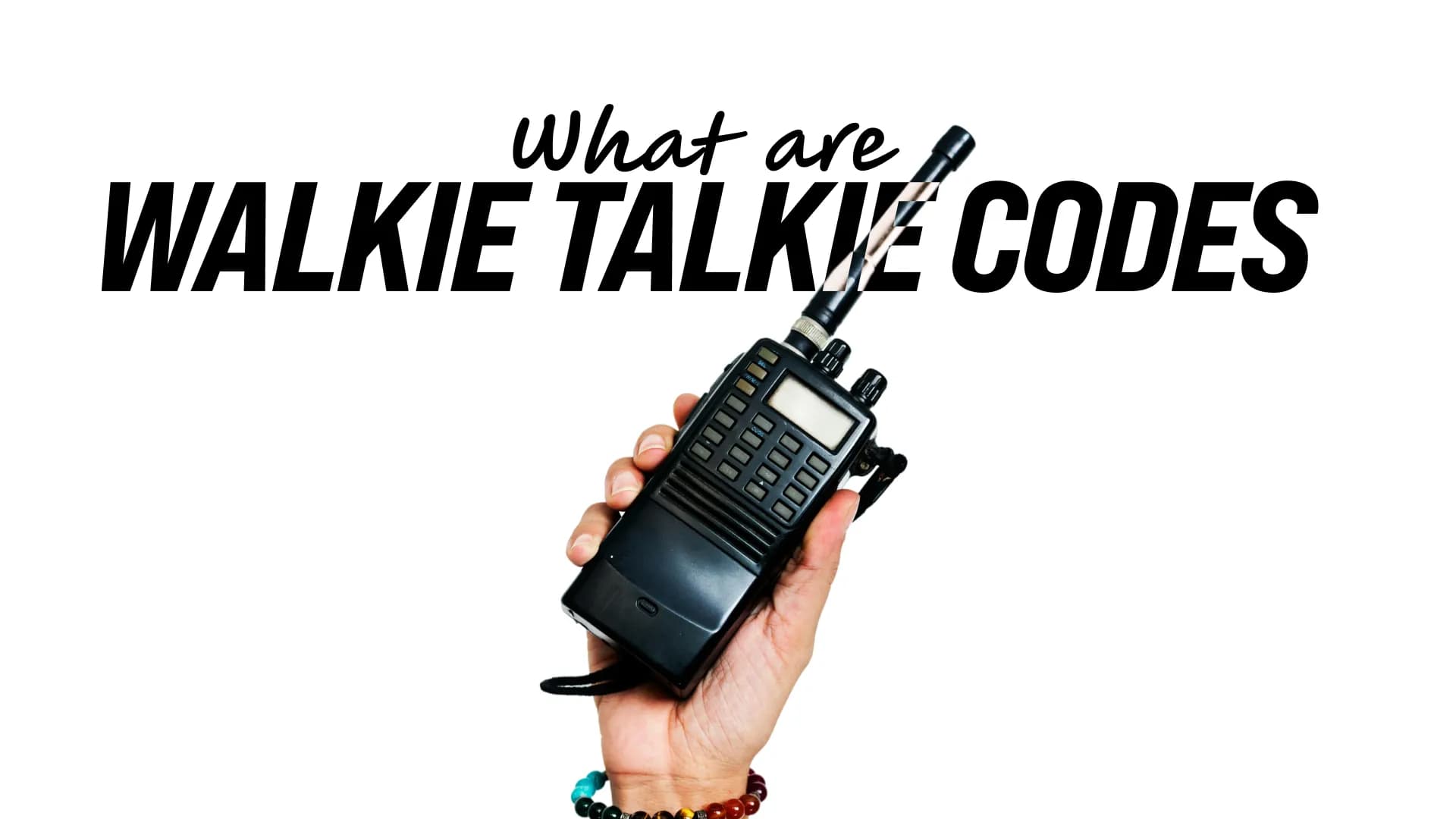
Table of Contents
- Why walkie talkie codes matter on a film set
- What are the 10 radio codes used on film sets?
- What do people with walkie-talkies say on a film set?
- How do channel assignments work on a film set?
- The NATO phonetic alphabet for film crews
- What is the 3-3-3 radio rule?
- Radio etiquette every film crew member should follow
- Frequently Asked Questions
- Final thoughts
- Spotlight FX - Get free transitions, effects and workflow tools
Walkie talkie codes on a film set are standardized brevity codes, numeric signals, and production-specific phrases used by crew members to communicate quickly and clearly across departments without disrupting a live shoot. The most recognized example is "10-4," meaning "acknowledged," but on a professional set, the language goes much deeper than that.
Whether you're a first-time production assistant, a seasoned video editor stepping onto set for the first time, or a filmmaker building out your crew communication system, understanding walkie talkie codes is non-negotiable. Productions can cost upwards of $10,000 per hour to run. Every miscommunication, every repeated message, every wrong channel wastes time and money.
Why walkie talkie codes matter on a film set
A film set is one of the most communication-intensive environments in any creative industry. At any given moment, you might have a director of photography coordinating with the camera department, a first AD managing talent, a production coordinator tracking locations, and a grip team repositioning equipment, all simultaneously, all needing to talk to each other without stepping on each other's transmissions.
According to a 2023 Production Sound Report, proper radio communication saves an average of 23 minutes per hour on set. Over a 12-hour shoot day, that's nearly five hours of recovered production time. For indie filmmakers working with tight budgets, that difference can determine whether you finish on schedule or blow your contingency fund.
Walkie talkie codes also protect the creative environment. When a director calls "rolling," the last thing anyone needs is a radio crackling with unnecessary chatter. Codes keep transmissions short, purposeful, and professional, so the set stays focused on what matters: making the film.
What are the 10 radio codes used on film sets?
Film crews adapted 10-codes from public safety radio communication, keeping the most useful ones and adding production-specific meanings. These are the codes you'll hear most often on a professional set:
Essential 10-Codes for Film Crews
Code | Meaning | Example Usage |
|---|---|---|
10-1 | Quick bathroom break | "Taking a 10-1, back in two." |
10-2 | Longer bathroom break | "Need a 10-2, cover me." |
10-4 | Message received/understood | "10-4, on my way." |
10-20 | Location/Where are you? | "What's your 10-20?" |
10-63 | Prepare to copy (important info coming) | "10-63, new call time is 6 AM." |
Code 4 | Situation under control, no assistance needed | "Code 4, we've got it handled." |
Why 10-1 is the Most Used Code on Set
The 10-1 is arguably the most frequently heard code on any film set, and for good reason. Productions run long hours, and crew members need a discreet, professional way to step away briefly. If you need more time, you simply say "upgrade your 10-1," which signals a longer break without oversharing details. It's a small example of how film set language prioritizes efficiency and professionalism at every level.
What do people with walkie-talkies say on a film set?
Beyond numeric codes, film crews use a rich vocabulary of production-specific phrases. These terms are used across virtually every professional set, from Hollywood features to independent short films.
Core Communication Phrases
"Copy" / "Copy that" - The most common confirmation on set. Means you received and understood the message. More casual than "10-4" but identical in meaning.
"Go ahead" - Signals that you're ready to receive a message. Used in response to someone calling your name.
"Say again" / "Go again" - Requests a repeat of the last transmission. Never say "repeat" on a film set (it has a specific meaning in directing, asking talent to redo an action).
"Stand by" - You heard the call but can't respond immediately. Keeps the other person from thinking they've been ignored.
"Over" - Ends your transmission and signals you're waiting for a response.
"Out" - Ends the entire conversation. No reply expected.
"Walkie check" / "Radio check" - Tests whether your radio is working. The correct response is "Good check."
"Keying" - Accidentally holding the push-to-talk button, which blocks the channel for everyone. One of the most frustrating things you can do on set.
"Lock it up" - Instructs everyone to secure the set, stop movement, and eliminate noise. Usually called just before "rolling."
"Flying in" - An item or person is being brought to set immediately.
"Martini shot" - The final shot of the day. Named because the next shot is "in the glass."
"Wrap" - Production has ended for the day (or for the entire project).
How to Properly Address Someone Over Radio
On a film set, you always identify yourself and the person you're calling at the start of every transmission. The format is:
"[Your name] for [their name]" or "[Their name], this is [your name]"
For example: "Sarah for Marcus, we need the reflector on set, copy?"
This format immediately tells everyone on the channel who's speaking and who should respond, cutting through the noise of a busy production day.
How do channel assignments work on a film set?
One of the most important things to understand about film set radio communication is that different departments operate on different channels. This prevents crosstalk and keeps each department's communication clean and focused.
Channel assignments are always listed on the daily call sheet, and they can vary by production. That said, there's a widely used standard across the industry:
Standard Film Set Channel Assignments
Channel | Department/Use |
|---|---|
Channel 1 | Production (ADs, PAs, coordinators) |
Channel 2 | Open (longer one-on-one conversations) |
Channel 3 | Transportation |
Channel 4 | Open (general use) |
Channel 5 | Props/Art Department (or open) |
Channel 6 | Camera Department |
Channel 7 | Electric Department |
Channel 8 | Grip Department |
Channel 9+ | Locations, Stunts, Special Effects, or open |
Important Notes on Channels
Channel 1 is the most critical channel on set. It's where the first AD runs the show, calls "rolling," announces "cut," and coordinates all department heads. If you're a PA, you live on Channel 1. If you need to have a longer conversation with someone, the protocol is to say: "Switch to Channel 2, copy?" and move the conversation off the main production channel.
Regional variations exist as well. In New York and New Jersey productions, for example, Grip is often on Channel 5 and Electric on Channel 6, which is the reverse of the standard setup. Always check your call sheet before assuming.
The NATO phonetic alphabet for film crews
The NATO phonetic alphabet is used on set whenever you need to spell out a name, location, or code clearly over radio. Each letter has a corresponding word chosen specifically because it sounds distinct from every other word in the alphabet, even over poor audio quality.
Complete NATO Phonetic Alphabet
Letter | Code Word | Letter | Code Word |
|---|---|---|---|
A | Alfa | N | November |
B | Bravo | O | Oscar |
C | Charlie | P | Papa |
D | Delta | Q | Quebec |
E | Echo | R | Romeo |
F | Foxtrot | S | Sierra |
G | Golf | T | Tango |
H | Hotel | U | Uniform |
I | India | V | Victor |
J | Juliett | W | Whiskey |
K | Kilo | X | X-ray |
L | Lima | Y | Yankee |
M | Mike | Z | Zulu |
Practical Film Set Example
If you need to confirm a location name like "Barker Street" over radio, you'd say: "Bravo Alfa Romeo Kilo Echo Romeo, Sierra Tango Romeo Echo Echo Tango." This eliminates any chance of mishearing a street name during a noisy exterior shoot.
Numbers follow the same spoken format, with one exception: "9" is always pronounced "niner" to avoid confusion with "five" over degraded audio.
What is the 3-3-3 radio rule?
The 3-3-3 radio rule is an emergency communication protocol used when standard communication infrastructure fails. While it originated in survivalist and emergency preparedness communities, it has practical relevance for film and video productions shooting in remote locations, off-grid environments, or disaster-prone areas where cell service is unreliable.
How the 3-3-3 Rule Works
The rule is built around three simple numbers: turn on your radio every 3 hours, for at least 3 minutes, on channel 3 (or a pre-agreed equivalent).
Timing: Check in at the top of every third hour:
- 12:00 AM, 3:00 AM, 6:00 AM, 9:00 AM
- 12:00 PM, 3:00 PM, 6:00 PM, 9:00 PM
Channel: For film productions in remote areas, pre-designate a specific channel with your team before going off-grid. Common options include MURS-3 (151.940 MHz) or a pre-agreed FRS/GMRS channel.
Duration: Listen for at least 3 minutes. Transmit briefly if needed: "This is [name/call sign], monitoring, radio check please."
Why This Matters for Filmmakers
Productions shooting in wilderness locations, on water, or in areas with no cell coverage need a backup communication plan. The 3-3-3 rule gives your crew a predictable check-in schedule that conserves battery life while ensuring everyone knows when to listen for contact. It's a simple protocol that can genuinely save lives on a remote location shoot.
If clocks or devices fail, the rule has a built-in backup: use sunrise, noon, and sunset as your three timing anchors.
Radio etiquette every film crew member should follow
Knowing the codes is only half the job. How you use the radio matters just as much. Poor radio etiquette on a film set can disrupt takes, frustrate department heads, and mark you as unprofessional in an industry where reputation travels fast.
The Think-Press-Speak Method
Before you ever key your radio, follow this sequence:
- Think: Know exactly what you're going to say before pressing the button.
- Press: Hold the push-to-talk button and wait 1-2 seconds before speaking. This prevents your first words from being clipped.
- Speak: Deliver your message clearly, at a normal pace, slightly across the microphone rather than directly into it.
Core Etiquette Rules for Film Sets
Stay on your assigned channel. Don't wander onto other departments' channels unless you have a specific reason. If you need to reach someone on another channel, ask them to switch to an open channel.
Keep it brief. Radio time is shared. Say what you need, confirm receipt, and get off the channel. Long conversations belong on Channel 2 or via phone.
Never transmit during a take. When you hear "rolling," your radio goes silent. Period. If something urgent comes up, wait for "cut."
Carry spare batteries. Especially as a PA. Running out of battery mid-shoot is a rookie mistake that reflects poorly on your professionalism.
Respect the hierarchy. The first AD owns Channel 1. Don't talk over them, interrupt their calls, or use Channel 1 for non-production chatter.
No banter. Film sets are professional environments. Jokes, personal conversations, and unnecessary commentary have no place on the radio. Save it for lunch.
Acknowledge every message. If someone calls you, respond. Even a quick "stand by" tells them you heard them and are handling it. Silence creates confusion and anxiety on a busy set.
Common Mistakes First-Timers Make
Forgetting to identify themselves. Always say your name first. "This is Alex" before anything else.
Saying "repeat." On a film set, "repeat" is a directing term. Use "say again" instead.
Holding the PTT button too long. This blocks the channel for everyone. Transmit, release, wait.
Talking too fast. Adrenaline on set is real. Slow down. Clarity beats speed every time.
Leaving the radio on full volume near the set. Turn it down when you're close to the camera or talent. You don't want your radio crackling during a quiet emotional scene.
Frequently Asked Questions
What are the walkie talkie codes used on film sets?
Walkie talkie codes on film sets include adapted 10-codes (like 10-1 for a bathroom break and 10-4 for acknowledged), production-specific phrases (like "lock it up," "flying in," and "martini shot"), and standard radio procedure words like "copy," "over," "out," and "say again." These codes keep communication fast, clear, and professional across all departments.
What do people with walkie-talkies say on a film set?
Film crew members use phrases like "copy that" (message understood), "go ahead" (ready to receive), "say again" (please repeat), "stand by" (wait), "lock it up" (secure the set), "flying in" (item or person is on the way), and "walkie check" (testing the radio). Every transmission starts with identifying yourself and the person you're calling.
What is the 3-3-3 radio rule?
The 3-3-3 radio rule is an emergency communication protocol requiring users to turn on their radio every 3 hours, for at least 3 minutes, on channel 3 (or a pre-agreed frequency). For film productions shooting in remote or off-grid locations, it provides a reliable backup communication schedule when cell service is unavailable.
What are the 10 radio codes used in film production?
The most common 10-codes on film sets are 10-1 (quick bathroom break), 10-2 (longer bathroom break), 10-4 (message acknowledged), 10-20 (location), 10-63 (prepare to copy important information), and Code 4 (situation under control). These were adapted from public safety radio codes and are used consistently across most professional productions.
Final thoughts
Walkie talkie codes are one of those things that seem small until you're standing on a live set and realize that clear, fast communication is the difference between a smooth shoot day and a chaotic one. From 10-codes to channel assignments to proper radio etiquette, every piece of this language exists for a reason: to protect the production, respect everyone's time, and keep the creative work moving forward.
If you're new to set, print out a cheat sheet, study it before your first day, and don't be afraid to ask a more experienced crew member to clarify anything. If you're a filmmaker building your own crew, take the time to brief everyone on your channel assignments and communication protocols before the cameras roll. A few minutes of preparation saves hours of confusion.
The best film sets run like well-oiled machines, and the radio is a big part of that engine.
Related Posts
 Video Editing
What is Color Grading vs Color Correction? Everything Editors Need to Know
 Video Editing
What are J-Cuts and L-Cuts? Professional Dialogue Editing Explained
 Video Editing